
Surplus Electronic Inventory
Clarify the disposal scope based on inventory status, then discuss a whole-batch solution.
Review the requirements →Clarify the disposal scope based on inventory status, then discuss a whole-batch solution.
Review the requirements →
MCUs, analog chips, logic devices, and discontinued ICs are verified by full part number.
Review the requirements →
Discrete components such as diodes, transistors, and MOSFETs are grouped by specification and packaging.
Review the requirements →Verify memory inventory starting with capacity, generation, full part number, and batch.
Review the requirements →From project leftovers and order cancellations to full-warehouse clearance, first confirm the list of items available for disposal.
Review the requirements →First verify the goods’ location, ownership, and regulatory status, then determine the conditions for further coordination.
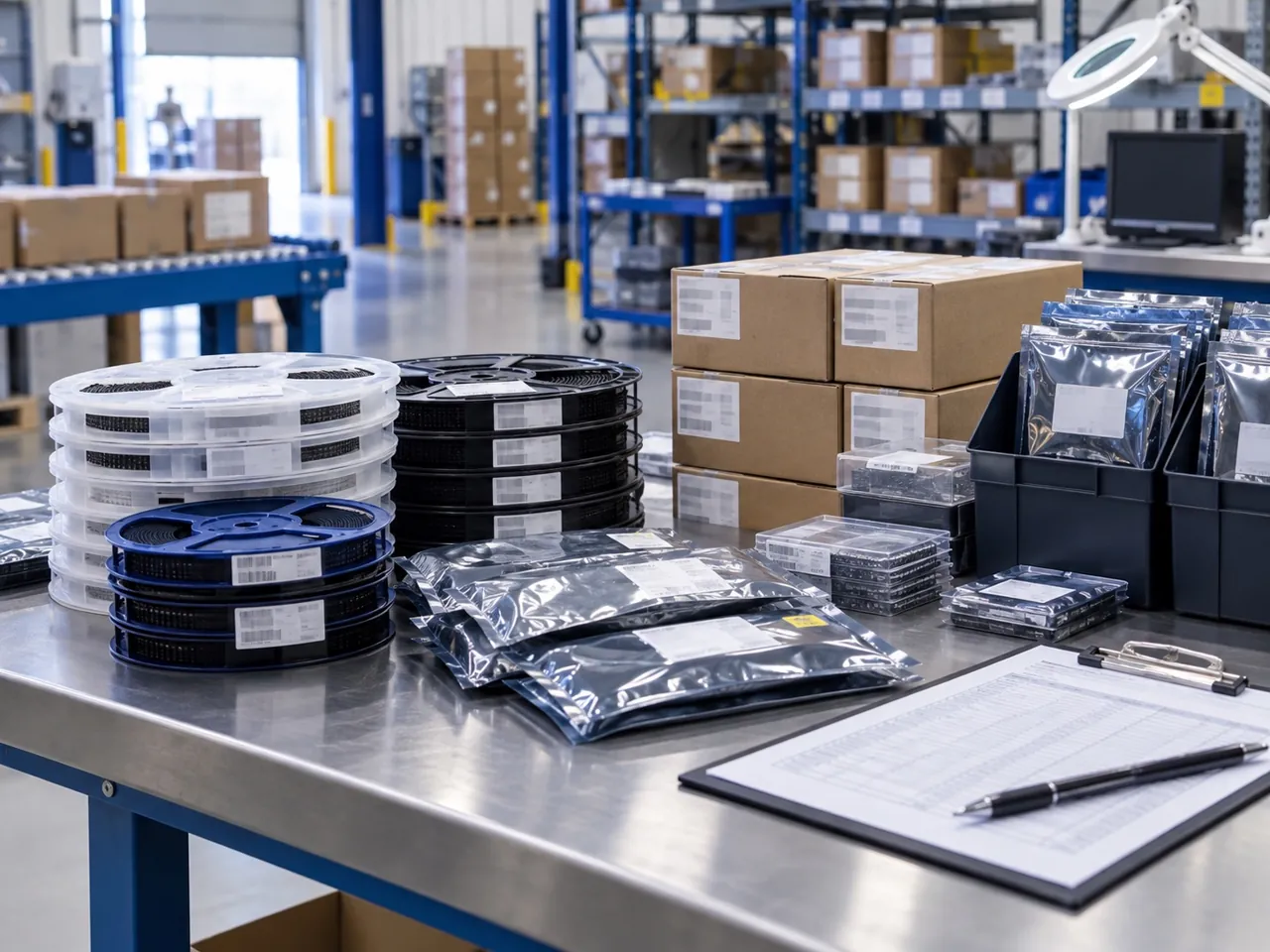
Review the requirements →Illustrative inventory images; not customer case photographs.
One clear starting point: send part numbers, brands, quantities, packaging condition, photos and location when available. Missing fields can be marked for confirmation; a page view or reference number is not a quote or acceptance.
For identifiable inventory that may still be reusable, list the part information and physical condition first.
Share manufacturer, complete part number, quantity, date code or lot when known, packaging and label photos.
See the BOM field guide →Include package, electrical marking, original or opened packaging, quantity range and any visible storage conditions.
Prepare inventory photos →Describe reels, trays, cartons, mixed lots and whether the list is separated by brand, model or warehouse batch.
Start a surplus inquiry →Choose the closest category and mark unknown fields instead of guessing.
| Category | Examples | Useful first details |
|---|---|---|
| IC / MCU / BGA | Controllers, drivers, interface and communication ICs | Manufacturer, complete part number, package, quantity and lot |
| Memory / storage | FLASH, NAND, NOR, eMMC, DDR | Part number, capacity, package, quantity and label photos |
| Power devices | IGBT, MOSFET, power modules | Marking, package, original/opened condition and storage notes |
| Passives / connectors | Capacitors, resistors, inductors, crystals and connectors | Specification, package or pitch, reels/cartons and quantity |
| Boards / modules | Industrial, communication and power boards | Board number, source, quantity, photos and reusable/scrap status |
For project changes, cancelled orders, production transfers, discontinued lines or warehouse clearance.
Useful list fields
Project or warehouse batch, manufacturer, complete part number, quantity, packaging, date code and current location.
Useful scene information
Photos of labels and cartons, storage layout, mixed-material notes, approximate volume and any access or loading limits.
If the BOM is incomplete
Send representative lines and label photos. Mark unknown fields instead of guessing; we can clarify the missing information next.
Describe e-waste separately from reusable components so category, weight, sorting and compliance questions remain clear.
Provide the material category, estimated weight, sorting status, photos and location. Mixed loads should be identified as mixed.
Read the classification guide →Note whether parts are separated, damaged, stripped or mixed, and whether sampling or a site check is needed.
Review the e-waste path →Share country, city, documents, customs or carrier constraints and preferred handover point; these are confirmed case by case.
Confirm cross-border details →The next action depends on the information, material condition and handover constraints actually confirmed.
Send a list, representative labels, photos, quantity range and location.
Identify reusable inventory, factory surplus and e-waste lines.
Discuss packaging, access, sampling, logistics, customs and timing needs.
Proceed only after both sides agree on the review and handover path.
Short answers for choosing the right starting information.
They can be sent in the same message, but please separate the lines or identify the material type. The review fields differ.
No. Representative part numbers, label photos, quantity range and location are a useful start. Mark uncertain fields for confirmation.
No. Price, acceptance, delivery and settlement are confirmed only after the relevant information and actual condition are checked.
GLOBAL INQUIRY / RFQ
Use the English RFQ to start with part numbers, photos, quantities and location.
Choose the closest material name, then send the fields you can confirm. This is a starting route, not acceptance or a quote.
Part number, manufacturer, quantity, package, lot and top-mark or label photos.
Submit IC details →For DC/DC, LDO, supervisors, op-amps and comparators, share the full part number, package, quantity, lot and label photos.
Submit power / analog details →Capacity, speed, package, quantity, date code and reel, tray or carton photos.
Submit memory details →Marking, electrical rating, quantity, original or opened condition and interface photos.
Submit power-device details →Specification, package or pitch, brand, quantity and reel, carton or interface photos.
Submit passive details → Submit connector details →Board number or material category, quantity or weight, sorting status, photos and location.
Submit e-waste details →Project or warehouse batch, representative lines, scene photos, volume and country or city.
Start a BOM inquiry →Offer stock by complete part number, quantity basis, packaging condition and location. Mark whether you own the stock or represent its owner, and whether you need a whole-lot discussion or separate batches. Reusable components and e-waste follow separate review paths.
Prepare excess component inventory for review: complete part numbers, quantities, packaging, lot condition and quote scope before arranging a handover.
Plan a remote electronics inventory handover with a versioned list, carton references, inspection scope, receiving confirmation and agreed payment milestones.