
Selling Excess Electronic Components: A Seller's Guide | HXG
Prepare excess component inventory for review: complete part numbers, quantities, packaging, lot condition and quote scope before arranging a handover.
Related service →Prepare excess component inventory for review: complete part numbers, quantities, packaging, lot condition and quote scope before arranging a handover.
Related service →Plan a remote electronics inventory handover with a versioned list, carton references, inspection scope, receiving confirmation and agreed payment milestones.
Related service →Start with facts you can verify: part numbers, brands, quantity range, packaging condition, photos and location. A guide can improve the first conversation, but acceptance, price and delivery are confirmed only after the actual information and condition are checked.
Choose the answer that matches the information you have now.
Start with manufacturer, complete part number, quantity, date code or lot when known, packaging condition and current location. Mark unknown fields instead of guessing.
See the BOM service checklist →Yes, representative lines, label photos, an estimated quantity and location can be a useful starting point. The missing fields can be clarified in the next conversation.
Start with the information you have →Take readable label and packaging photos, then add a wider scene photo showing sorting, cartons, reels, trays and access conditions. Keep the part number visible where possible.
Send photos with an RFQ →Reusable components are described by part information and condition; e-waste is described by category, weight, sorting status and photos. Separate lines keep the review clear.
Review the e-waste path →Identify the material category, estimated weight, mixed or separated status, photos, location and whether sampling or a site check may be needed.
Prepare an e-waste inquiry →Country, destination, customs documents, packaging, carrier, sampling, compliance and receiving conditions must be discussed for the specific shipment.
Confirm cross-border details →Move from information quality to a practical next step.
Separate reusable components, factory surplus and e-waste.
Prepare lists, labels, packaging, quantity and scene photos.
Add location, access, sampling, logistics or customs conditions.
Submit an RFQ and confirm what still needs checking.
Boundaries that keep an online inquiry useful.
No. The guides explain what information to prepare. Acceptance, price, delivery and settlement depend on the actual material and mutually confirmed conditions.
Yes. You can submit English or Chinese descriptions, lists and photos. Mark uncertain fields so they can be checked rather than guessed.
Send representative part information or material photos with quantity and location. The next review can then identify missing details and a suitable handover path.
GLOBAL INQUIRY / RFQ
Send the information you can confirm and mark anything that still needs checking.
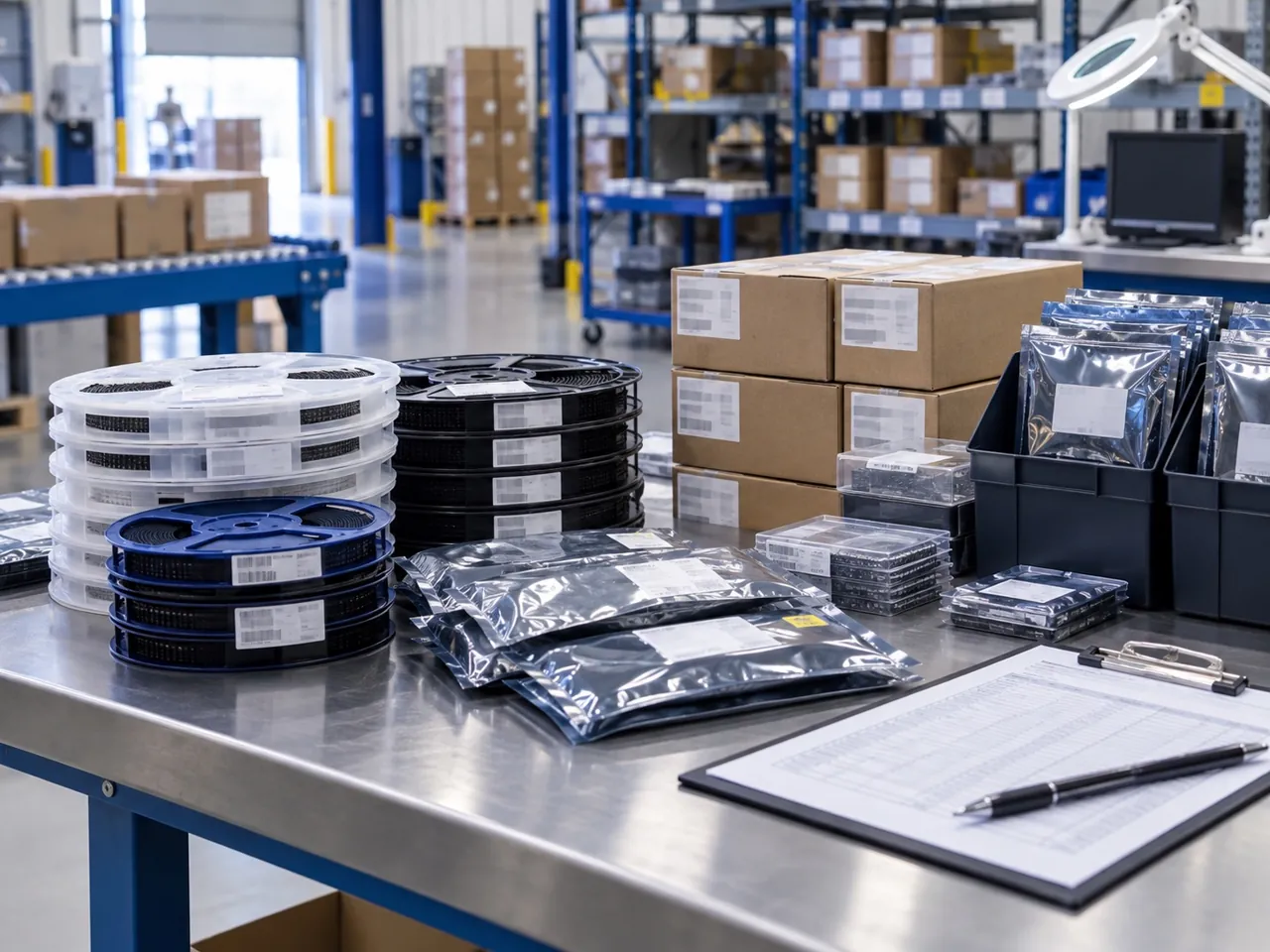
Clarify the disposal scope based on inventory status, then discuss a whole-batch solution.
Review the requirements →
MCUs, analog chips, logic devices, and discontinued ICs are verified by full part number.
Review the requirements →
Discrete components such as diodes, transistors, and MOSFETs are grouped by specification and packaging.
Review the requirements →Verify memory inventory starting with capacity, generation, full part number, and batch.
Review the requirements →From project leftovers and order cancellations to full-warehouse clearance, first confirm the list of items available for disposal.
Review the requirements →First verify the goods’ location, ownership, and regulatory status, then determine the conditions for further coordination.
Review the requirements →Illustrative inventory images; not customer case photographs.