
Selling surplus components starts with a clear inventory offer, not a retail price list. Identify what you own or are authorised to offer, connect each line to physical stock, and explain the condition and location. HXG Components reviews surplus inventory enquiries; acceptance and commercial terms are confirmed for the specific lot.
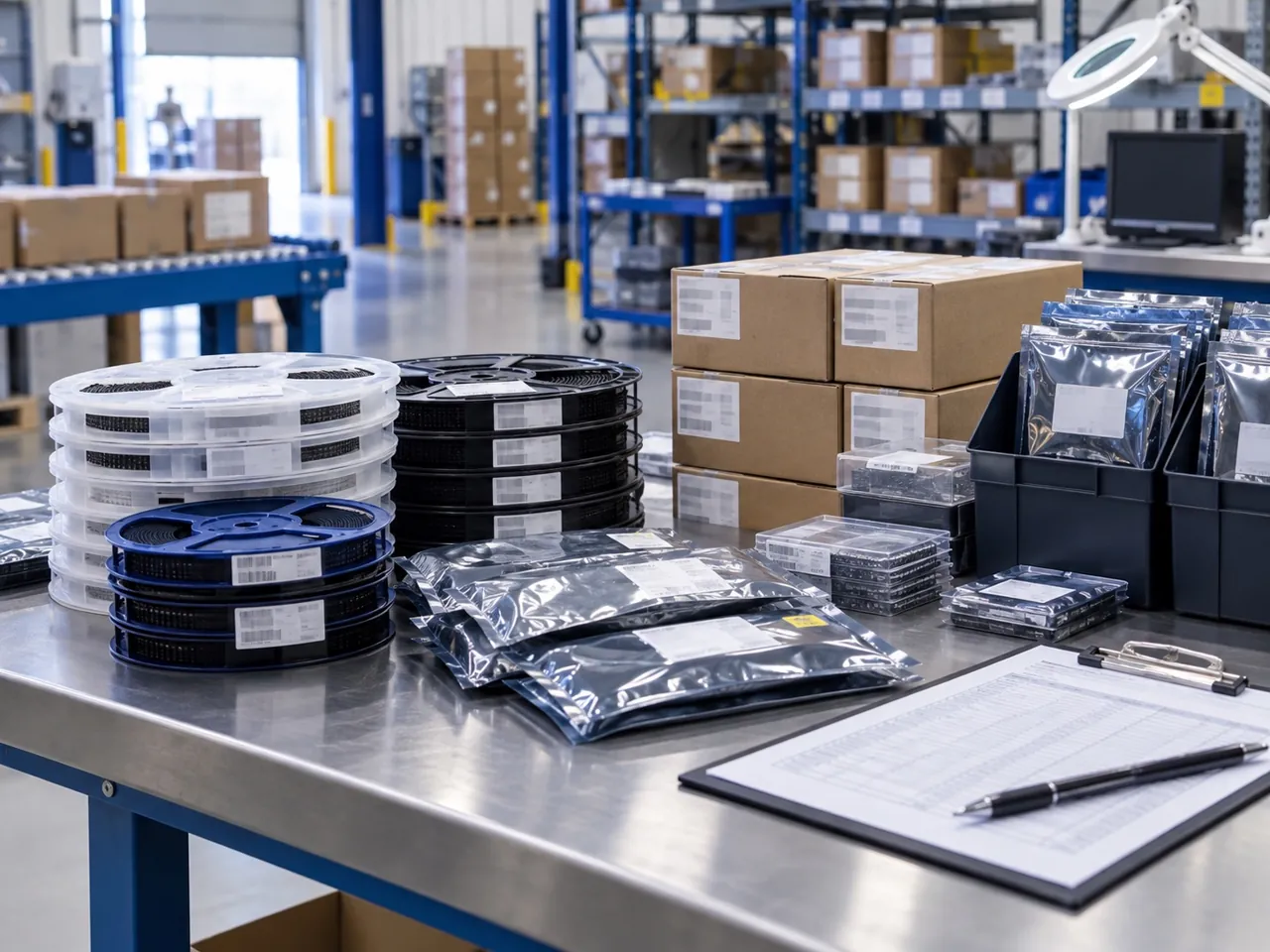
Define the inventory you are offering
Separate project leftovers, discontinued production stock and general trade inventory. Mark lines reserved for production so they are not accidentally included in a disposal offer. If you act for the stock owner, explain your role and who can authorise the handover. Use a version date and stable line IDs so later changes can be tracked without confusing old and new quantities.
Build a usable stock list
- Manufacturer and complete manufacturer part number, including suffixes.
- Quantity, unit and whether the figure is counted, label-based or estimated.
- Date code or lot information when available.
- Packaging and condition: sealed, opened, loose, mixed or removed from equipment.
- Country, city and carton or warehouse reference.
Keep uncertain characters visible in a photograph instead of guessing a part number. A reel label can identify stock, but its printed quantity may not reflect the balance on a partly used reel. Different conditions should remain on separate lines even when the part number is identical.
Show the material behind the spreadsheet
Include readable label photographs, representative packaging images and an overview of the lot. Match photo names to line or carton references. Existing inspection records can be included with their lot scope; absence of a report should be stated plainly. A sealed package is a condition description, not proof that electrical testing or authenticity verification has been completed.
Compare complete offers, not isolated headline prices
Ask which lines and quantities an offer covers. A proposal for selected ICs is different from a whole-lot proposal that also covers passives and connectors. Confirm currency, pricing basis, applicable taxes, inspection costs, transport responsibilities and offer validity. Leave unknown costs open for confirmation instead of treating them as zero. Also agree what happens if physical counts or condition differ from the initial list.
Plan the next conversation
State whether you prefer a whole-lot discussion or separate batches, and describe any warehouse closing date or access restrictions. An initial online review identifies missing information; it does not reserve a collection slot or confirm a final payment amount. Sampling, inspection, delivery and settlement arrangements should be agreed before stock moves. For material outside China, establish the receiving location and applicable shipping requirements before considering dispatch.
Send a focused enquiry to HXG
You can begin with a representative list, packaging photos, a quantity range and country or city. Use the English RFQ page to prepare a message, then send it through your own mail application or contact Mr. Lin by phone, WeChat or WhatsApp. The browser prepares the enquiry; it does not itself deliver attachments or confirm receipt. Reusable inventory and e-waste should be described separately so the right review path can be discussed.
Turn your inventory list into a conversation
Send what you can verify; mark missing fields for follow-up.
Prepare an inventory RFQ Related services → WhatsApp →